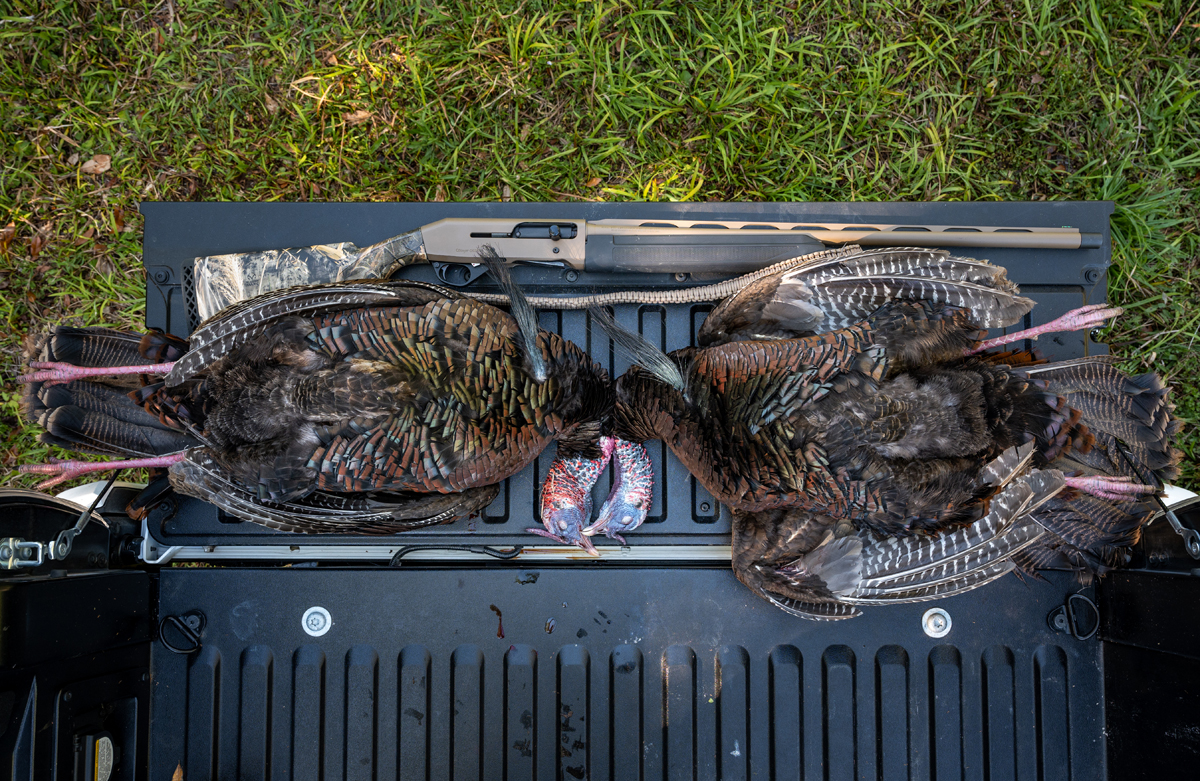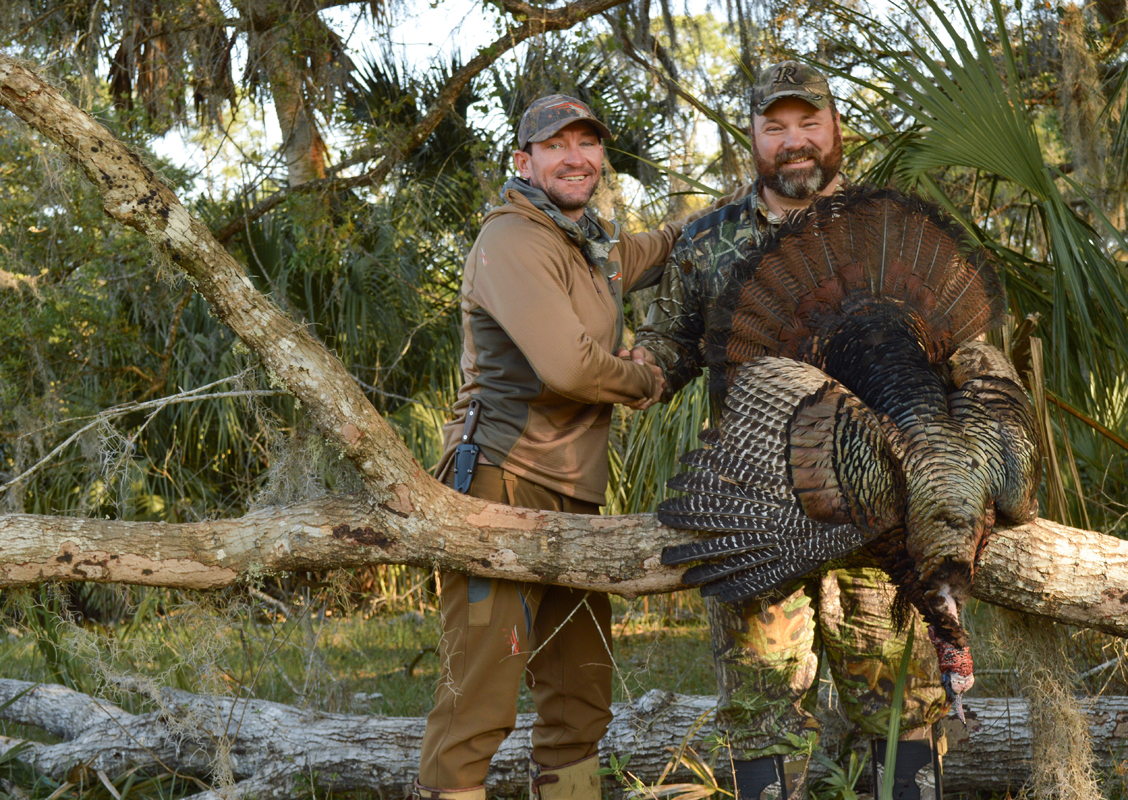

Osceola turkey hunting in Florida plays by a different set of rules. Tactics that work well in other states often struggle here. Bird behavior, terrain, and hunting pressure all shift the equation. Once you understand those differences, results tend to improve quickly.
Here’s what truly moves the needle.
1. Habitat Drives Everything
Unlike regions where terrain naturally funnels movement, much of Florida is flat and open. Osceola turkeys can travel almost anywhere with little restriction. That makes subtle habitat details far more important than obvious landmarks.
What consistently matters:
- Transition zones – Palmettos meeting open sand, hardwood pockets inside pine flats, thin cover changes.
- Visibility – Osceola turkeys often spot danger long before hunters see them.
- Minor terrain features – Slight rises, scattered trees, and shade lines become critical positioning tools.
Many hunters focus heavily on equipment. In Florida, location typically outweighs gear.
2. Pressure Changes Osceola Turkey Behavior
Osceola turkeys regularly experience hunting pressure, especially on accessible ground. Pressured birds quickly adjust, often becoming quieter and less predictable.
Common patterns:
- Gobbling decreases as the season progresses
- Birds hang up more frequently
- Silent approaches increase
It’s easy to assume birds have left an area. More often, Osceola turkeys are still present — simply cautious.
Practical adjustment: When a gobbler goes silent, patience usually outperforms aggressive repositioning. Many Osceola turkeys circle slowly and appear unexpectedly.
3. Setup Mistakes That Cost Hunts
Open terrain exposes poor setups quickly. Osceola turkeys are extremely sensitive to unnatural shapes, movement, and poor concealment.
Higher-percentage setup principles:
- Use shadows as much as vegetation – Shade conceals movement better than cover alone.
- Avoid silhouette exposure – Even slight skyline contrast stands out.
- Expect wide approach angles – Osceola turkeys rarely commit in straight lines.
Instead of planning for the perfect approach, plan for realistic unpredictability.
4. Calling Strategy: Subtle Beats Aggressive
One of the most consistent Florida lessons: excessive calling often works against the hunter. Pressured Osceola turkeys frequently associate loud, persistent sequences with danger.
A more effective approach:
- Start soft and natural
- Increase intensity only if necessary
- Build in long silent pauses
Curiosity draws Osceola turkeys more reliably than constant stimulation.
5. Patience Outperforms Movement
Florida’s open landscapes encourage the urge to move. That instinct regularly backfires. Osceola turkeys commonly take slow, indirect routes, even when responsive.
Typical scenario:
A gobbler answers early, then goes quiet. The urge is to relocate. Thirty minutes later, the bird quietly steps into range from an unexpected direction.
This pattern is extremely common.
Stillness ruins fewer hunts than impatience.
Final Thoughts
Osceola turkey hunting success in Florida depends less on theatrics and more on reading habitat, choosing disciplined setups, and exercising restraint. These birds are not necessarily more difficult — they are simply adapted to unique conditions.
A productive mindset for Florida hunters:
Let the Osceola turkey make the mistake.